
Well, honestly, I don’t know about you, but when Christmas rolls around, I’m ready for the cozy, the quiet, the predictable. I want the smell of pine needles and maybe a little peppermint mocha. I want to see my dog, Mia, curled up by the fireplace, looking like a little white, fluffy Teddy Bear rug.
But this year, Kevin and Michael and I took a trip, and it completely changed how I think about that quiet, predictable Christmas feeling.
We went to Bethlehem, Pennsylvania.
Now, if you live in Pennsylvania, you know Bethlehem is “Christmas City, USA.” They named the town on Christmas Eve back in 1741, which I just love. It was founded by Moravian Christians who wanted everything about that place to point back to Jesus.

But the part of Bethlehem we went to? It wasn’t the quaint, historic Moravian district. We went to the Christkindlmarkt—the big Christmas market—and it sits right under the remains of the old Bethlehem Steel plant.
Let me set the scene for you.
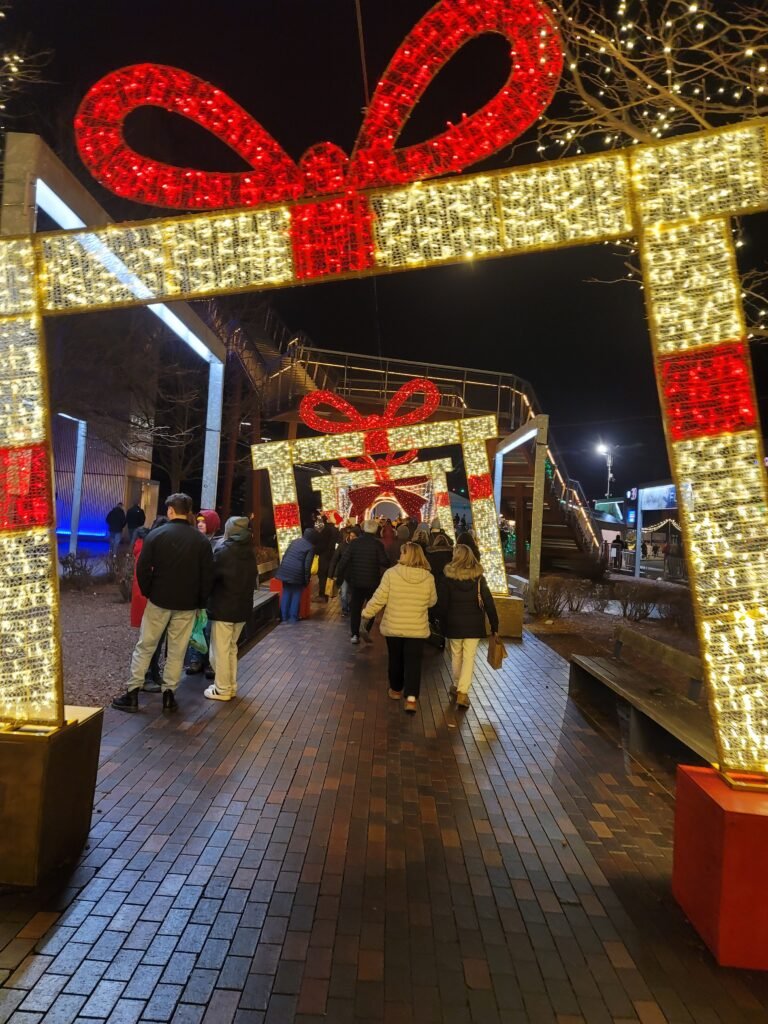
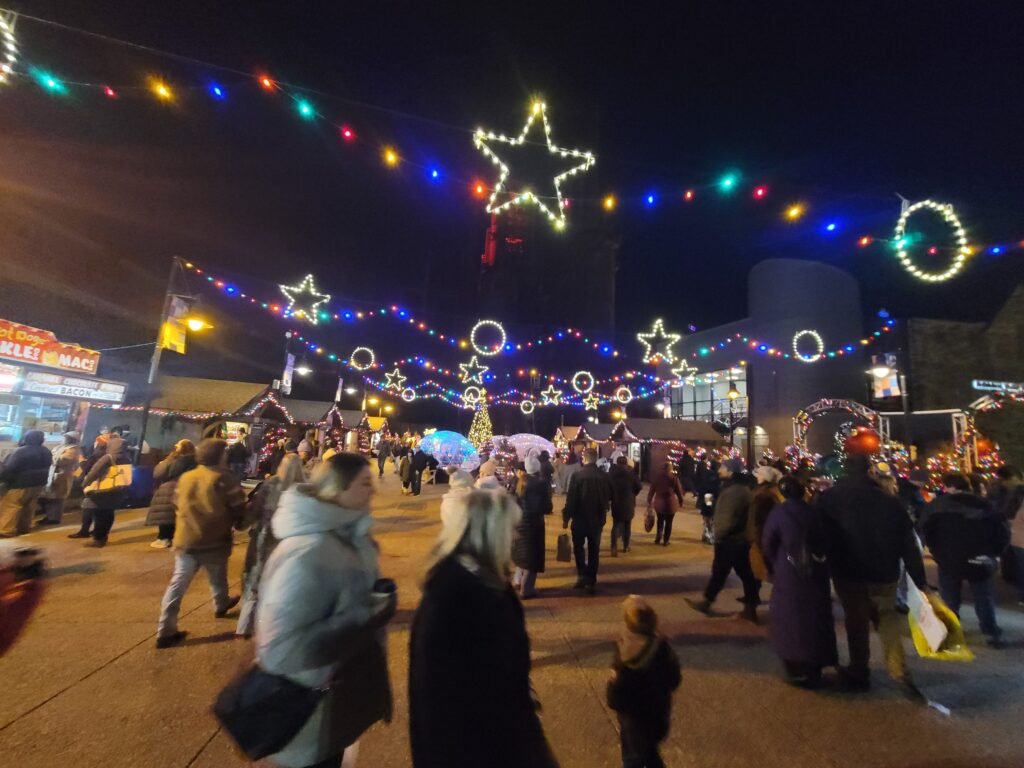
The air was sharp and cold. You could smell the bratwurst and the sweet, sugary strudel all mingling together. We were walking through these long, white tents full of beautiful, handcrafted ornaments and wooden nutcrackers, with Christmas carols playing over the speakers.
And then you look up.
Above all the twinkling, cheerful lights, above the families bundled up and laughing, above the gift-shaped arches, stand these massive, rusted, silent steel towers.
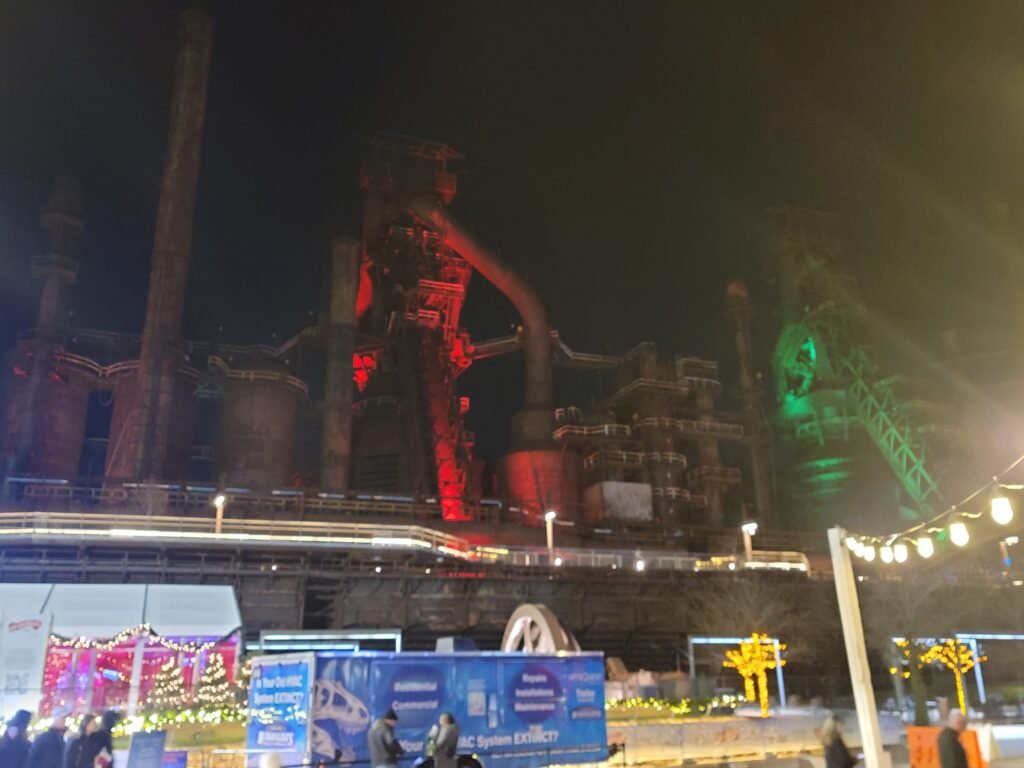
They are huge. They are dark. They are the blast furnaces that once roared with fire, shaking the ground with noise and heavy labor. They were the heart of American industry for over a hundred years. They were built for steel—for bridges, for ships, for war.
And now? They are the backdrop for a Christmas market.
When the Furnace Goes Quiet
I just stood there for a minute, looking up at that dark, towering silhouette against the night sky, with all the soft, colorful light of the market shining right up against it.
I was like, Wow. This ground used to vibrate. It used to be a place of molten, fiery steel and a thousand men working in the heat. It was the place where you clocked in, did the hard, hard work, and then it just… stopped.
The last furnace shut down in 1995.
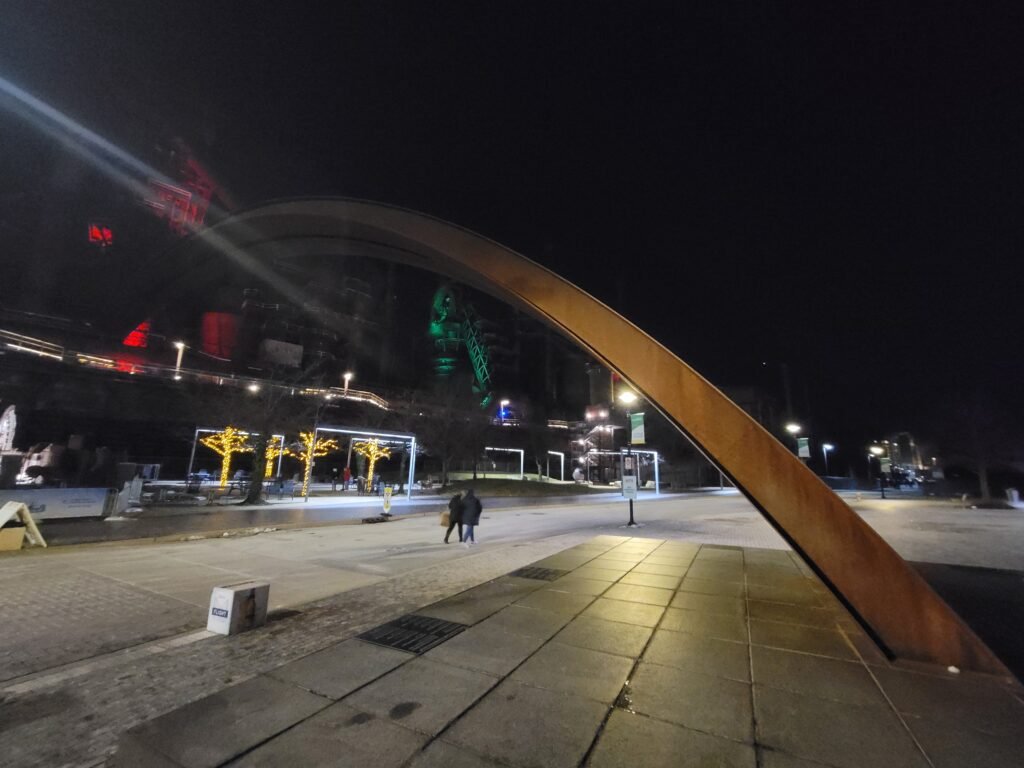
Think about that moment. When the plant closed, it wasn’t just a building that shut down. It was a whole life for so many people. It was a lost purpose. It was a lot of pain and a lot of questions about the future. It was a giant, echoing monument to something that was finished.
And I started to think about the closed plants in our own lives.
You know, those places in your heart that were once full of fire—full of passion, full of dreams, full of work you were so sure was going to succeed. Maybe it was a marriage that ended, a career path that took a sudden turn, or a health struggle that shut down your plans, like when Kevin had his four medical surgeries. That was a time when our whole life felt like a closed plant for a while.
Or maybe it’s smaller, but just as frustrating.

We all have those moments, don’t we? Where we only see the ruins. Where we only see the empty shell of what used to be. The place where the noise of striving and working has gone silent, and all that’s left is the cold, rusted structure of disappointment.
Here’s a question: Where in your life do you see only ruins or an empty shell?
The Bridge Builder and the Broken
But here’s the amazing part. The people of Bethlehem didn’t just leave those stacks to rust and rot. They didn’t tear them down. They built something new right under them. They turned the ground of industry into a place of celebration, community, and light.
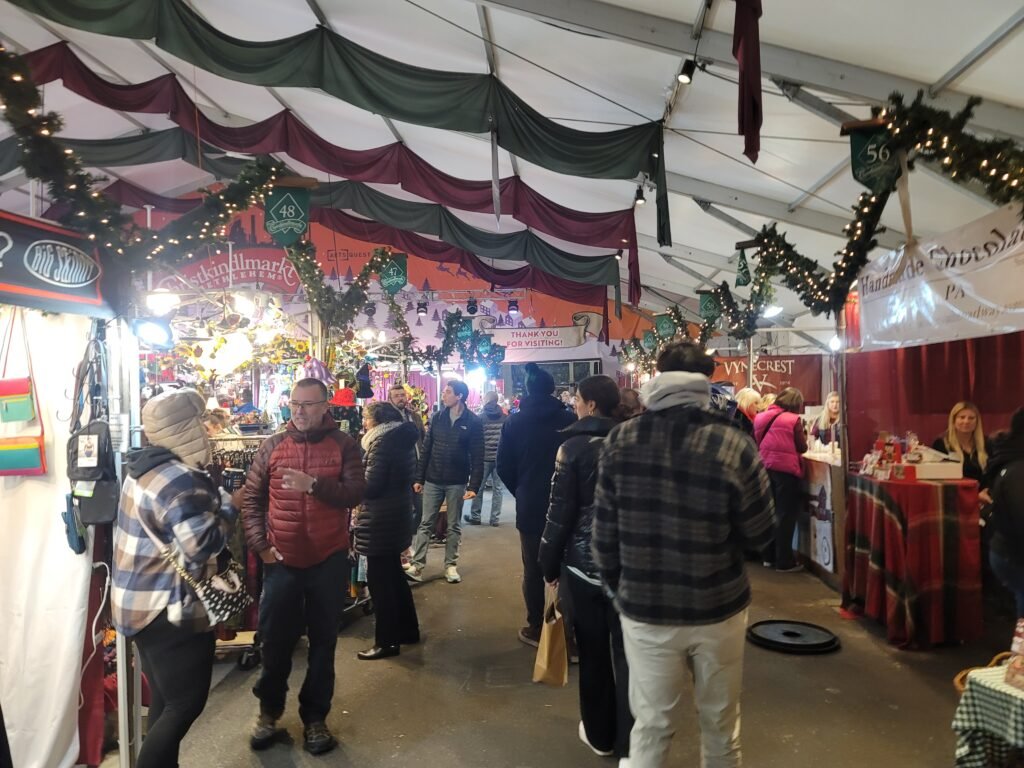
They took the ashes of that economic pain and created a spot where families could gather and find joy.
That is the most powerful picture of what Christ does in our lives.

He is the ultimate bridge-builder. You know, Bethlehem Steel once made the metal for bridges and ships that carried people safely across great distances. But in a far deeper, more eternal way, the Bethlehem of the Bible gave the world the One who bridges heaven and earth. He is the One who carries us from death to life.
I love to think about those stories in the Gospel.
Take the story of the paralytic lowered through the roof. The man couldn’t walk. His body was twisted. All his friends saw was a body in need of a miracle, a life that was shut down. The friends were desperate to get to Jesus, so they did the unexpected. They climbed to the top of the house; they cut through the roof, and they lowered their friend down.
It was messy. It was unorthodox. It was intrusive.
But their faith, that desperate, messy faith, got God’s attention. Jesus didn’t just heal the man’s body; He forgave his sins first. He took that “closed plant” of a life and transformed it from the inside out.
That’s the promise of Isaiah 61:3, right? God gives us “beauty for ashes.” He takes the wreckage, the ruins, and the disappointments—the places in our lives that are hard and cold—and He turns them into something beautiful.
He is saying, “Behold, I am making all things new,” just like it says in Revelation 21:5. He doesn’t wipe out your history. He just repurposes the ground it stood on.
Light in the Shadow
Now look, I know it can be draining to contemplate life, as opposed to just living it. But taking time to fully and truthfully examine where you are can prevent you from sliding into predictable patterns.
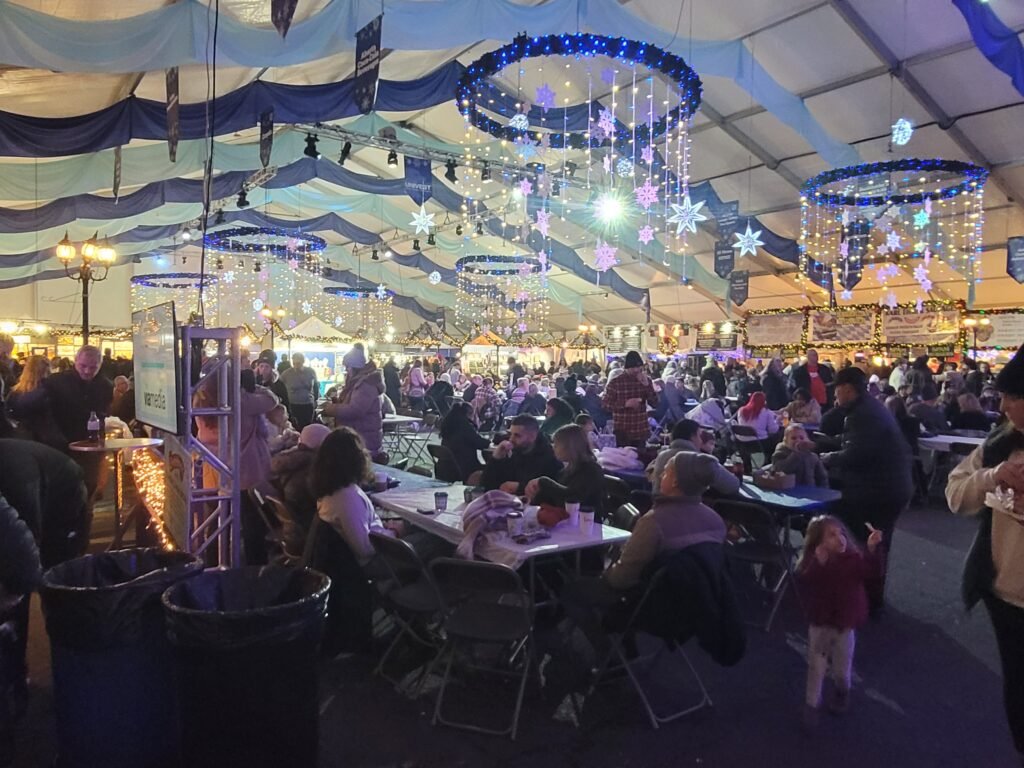
When we were at the Christkindlmarkt, I looked at the lights again. The twinkling, warm lights of the booths, the glowing stars, the big “Danke Schön” sign—which means thank you—shining right up against the dark, black silhouette of the steel stacks.

That darkness is our history. It’s the shadow of our sin, our mistakes, our shame, and all the ways we’ve disappointed ourselves. We’ve all got those stacks looming over us. We all carry the weight of something that was supposed to work but didn’t.
But the light? That’s gratitude. That’s grace. That’s the light of Christ.
It doesn’t erase the stacks. They are still there, a reminder of the past. But the light shines against them. It shines because of the contrast.
I’ve studied this, and sometimes, the most beautiful music only flows when the violent winter winds blow. It’s like that German baron who built a giant harp between his castle towers. With a weak wind, there was no sound. But when the violent winter winds blew, the most beautiful music flowed. God’s power and grace are most evident in our lives during the storms of adversity.

That is what the Christmas market is doing. It’s taking the darkest, coldest, most “finished” part of the city, and it is saying, “No. This is where the light shines the brightest. This is where the people gather. This is where we say ‘Danke Schön’ for the hope of Christ.”
You know, some people try to find satisfaction in what the writer of Ecclesiastes called “work.” We try to build our own houses and plant our own vineyards, and we think if we just work hard enough, we won’t have to look at the ruins of our past. But that labor can become a numbing distraction from God.
The beautiful part of the Christmas market is that it is not about labor anymore. It’s about receiving. It’s about community. It’s about the simple, profound joy of a little light in the darkness.
Your Market of Grace

So, at the end of many chapters in my life, I’ve found myself asking: Am I where I want to be, doing what I want to be doing, with the people I want to be doing it with? Sometimes the answer is a humbling, big, fat Nope.
Maybe you’ve found yourself wondering the same thing. Maybe you have a closed plant in your heart. A dream that died. A relationship that soured. A habit you can’t seem to kick. A feeling of unworthiness that looms over you like a giant, dark steel stack.
Here’s what I want you to do. I want you to stand, right now, in your imagination, beneath those rusted steel towers in Bethlehem.
Let’s take a closer look at that closed plant. Don’t try to hide or clean it up. Don’t try to pretend it didn’t fail.
I’m telling you, God can take that shut-down area—that lost dream, that old sin, that tired routine—and He can turn it into a living sanctuary. He can transform it into a “Christmas market of grace.”
It is never too late to start living.
What he needs is for you to give Him the ground.
You see, you cannot give something you don’t have. You can’t give God a clean, perfect heart because none of us have one. But you can give Him the ruins. You can give Him the ashes. You can give Him the closed plant.
Because Jesus has acted on your behalf. He already paid the fine. He already bridged the gap.
Let Jesus do for you what the people of Bethlehem did for those steel stacks. Let Him bring the light, the music, and the community right to the heart of your biggest disappointment.
He wants to shine His light right up against your dark history, not to judge it, but to say, “This is where My victory is clearest.”
Reflect on how these words apply to your life today. Go ahead. Offer Him your closed plant. Ask Him to make it shine.
Mark it down: He will turn the ruins into a place of joy.