
So there we were, standing outside this gorgeous old stone farmhouse in Pennsylvania. Kevin, Michael, and I had driven out to the Peter Wentz Farmstead for what I thought would be a nice little family history trip. You know how it is—you see a sign for a historical site and think, “Well, why not?”
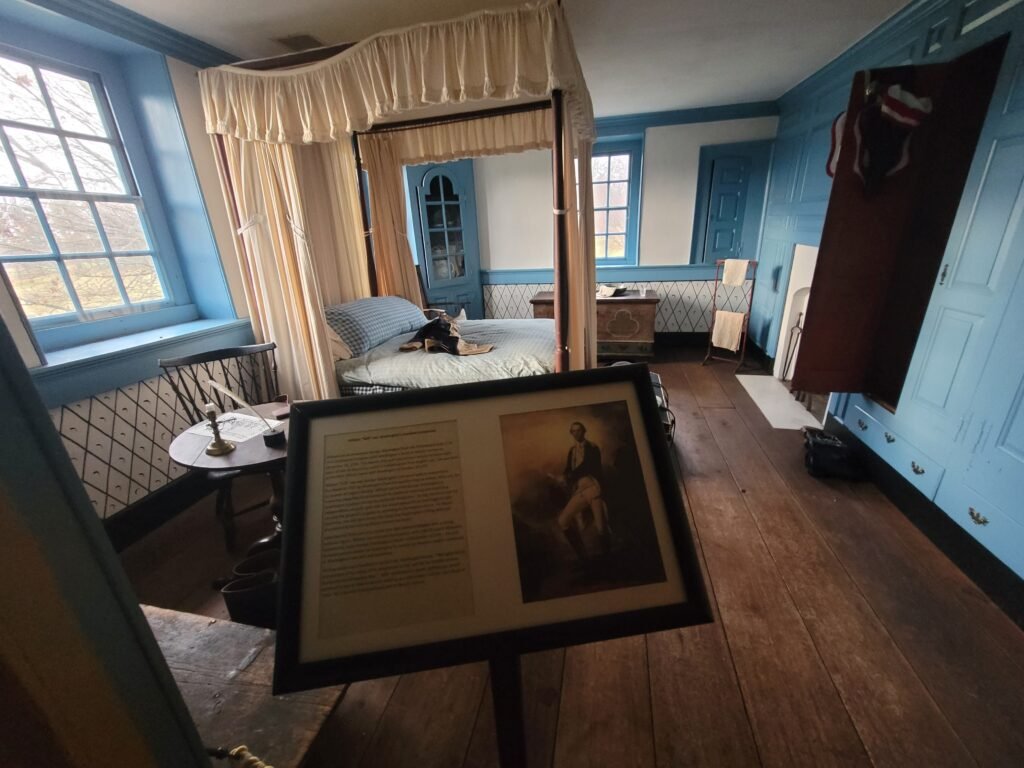
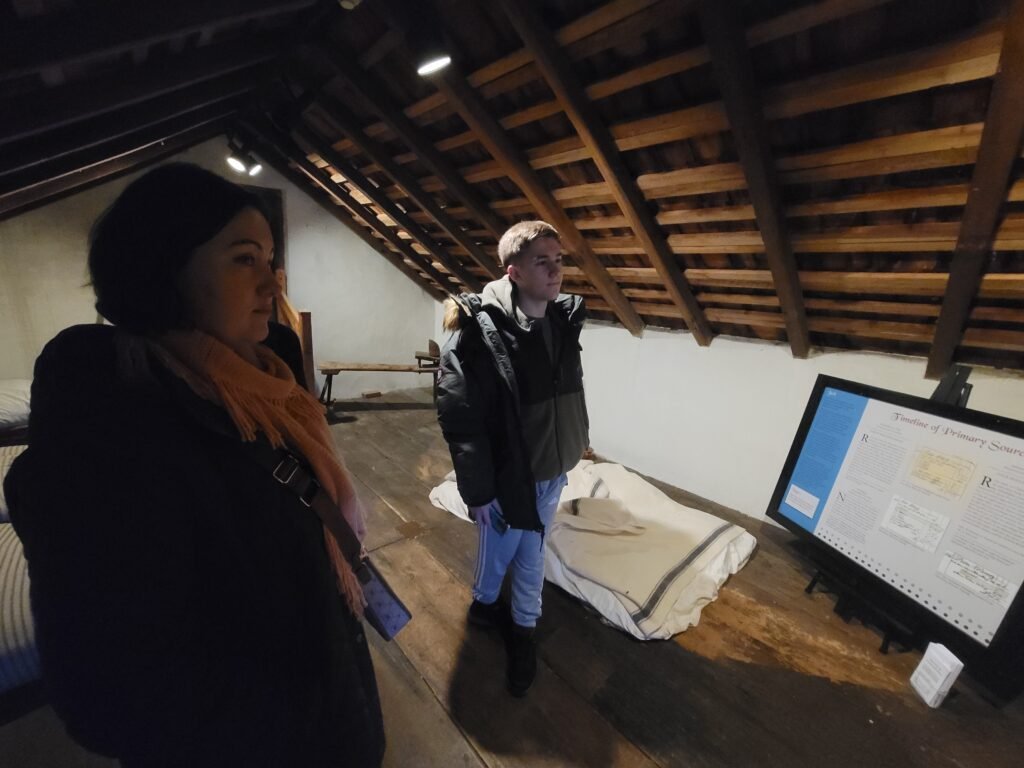
The tour guide was lovely, walking us through the colonial rooms and telling us about how George Washington himself had used this very house as his headquarters during the Revolutionary War. But then we got to this stone plaque on the wall, and she just kind of shrugged. “It’s in German,” he said. “We’re not really sure what it says.”
The Mystery at the Farmstead
I was like, “Kevin, what in the world is written on this wall?”
So naturally, I took a picture. When we got home, I fed it into AI to translate, and when those words came back, I just sat there staring at my phone. This wasn’t just some old historical marker.
This was a four-part prayer that completely rocked my world:
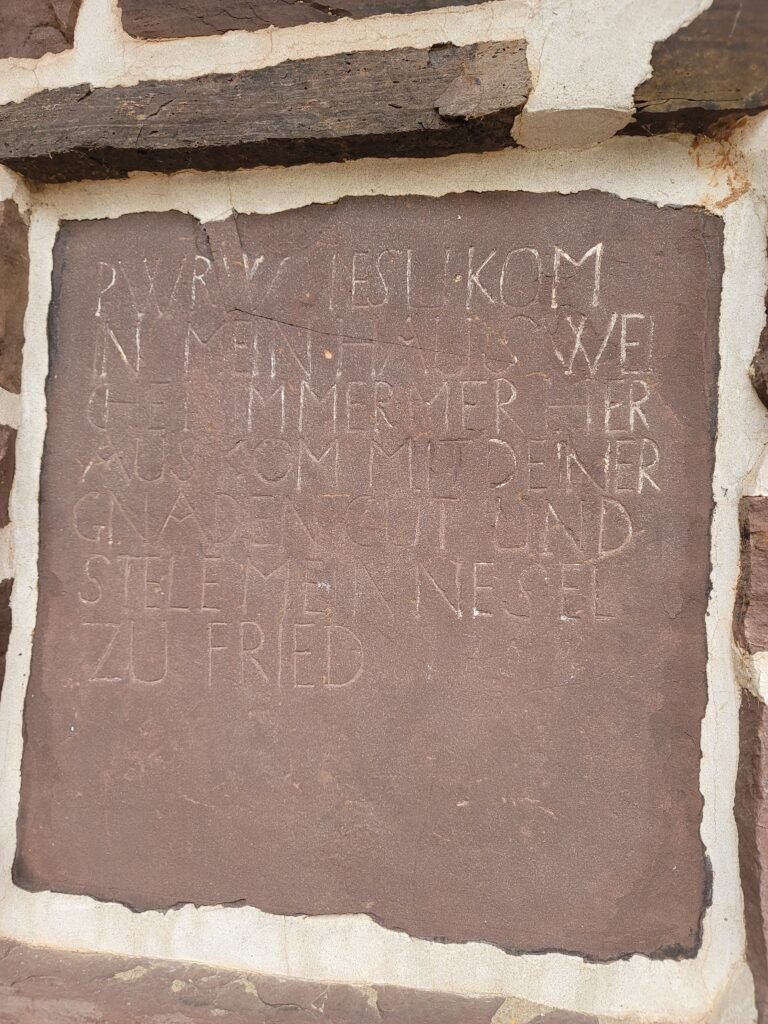
German: PWR WESL: KOM
IN MEIN HAUS WEI
CH IMMER MEHR
AUS KOMM MIT DEINER
GNADEN GUT UND
STELE MEIN NESEL
ZU FRIED
English translation: Lord Jesus: Come into my house because
I keep withdrawing
Come with your
gracious goodness and
put my donkey
at peace”
“Lord Jesus, come into my house…..Come with your
gracious goodness ….
The Invitation: “Lord Jesus, Come Into My House”
Here’s what hit me about that farmstead. This wasn’t just any old house—this was George Washington’s temporary headquarters. A place where the fate of a nation was being decided. Strategy sessions, battle plans, the weight of an entire revolution on one man’s shoulders. The stress must have been overwhelming.
And yet, carved into the very stones of that house was this simple invitation: “Lord Jesus, come into my house.”
Now, I don’t know about you, but when I think about inviting Jesus into my house, my first instinct is to start cleaning. You know what I mean? Like when your mother-in-law calls and says she’s coming over in twenty minutes, and suddenly you’re shoving everything into closets and spraying Febreze on the couch cushions.
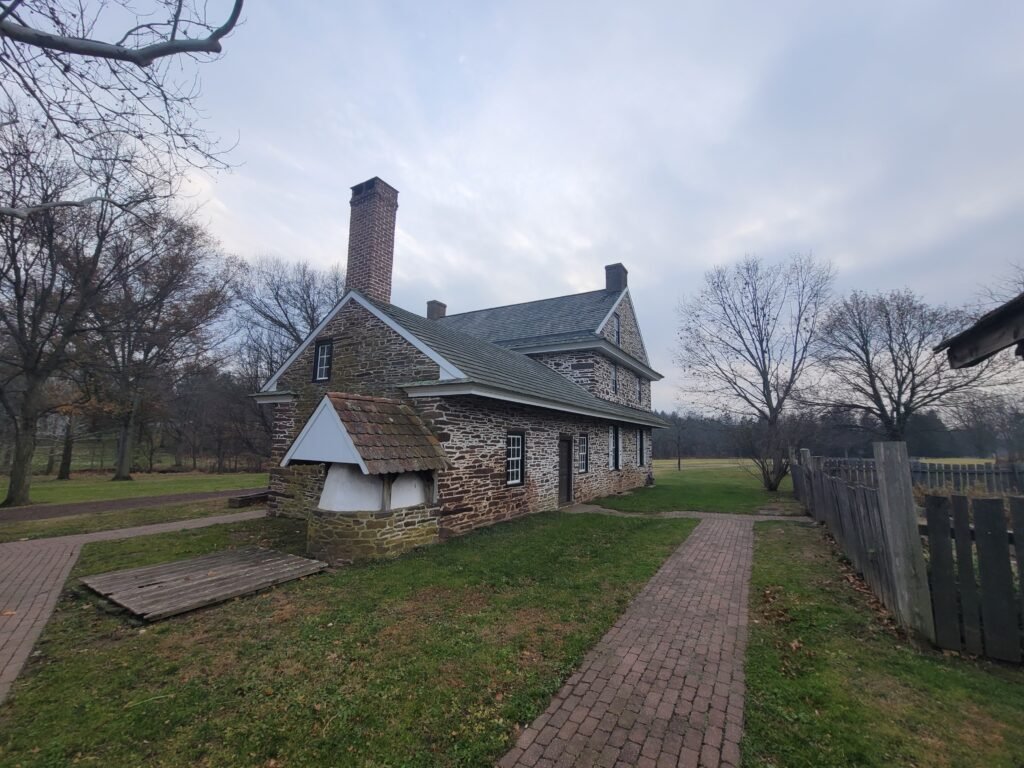
But here’s the thing—our hearts are like that farmstead. They’re the headquarters of our daily battles. Every decision we make, every worry that keeps us up at night, every fear about whether we’re good enough, smart enough, qualified enough—it all gets decided right there in the control center of our souls.

The German farmers who built that house understood something profound. They knew that if you’re going to invite Jesus into your headquarters, you don’t invite Him into just the guest room. You don’t keep Him in the tidy living room where everything looks perfect on Sunday mornings.
You invite Him into the whole house.

I think about Revelation 3:20, where Jesus says,
“Behold, I stand at the door and knock. If anyone hears my voice and opens the door, I will come in to him and eat with him, and he with me.”
He’s not asking for a quick visit. He wants to sit down and have dinner. He wants to stay.
But here’s where I mess it up every single time. I think I have to earn His presence. Like I need to get my act together first, clean up my attitude, fix my prayer life, stop being such a disaster with my emotions.
I picture Jesus standing at the door with His arms crossed, tapping His foot, waiting for me to prove I’m worthy of His company.
The beautiful thing about that German inscription is that it’s just an invitation. “Come into my house.” Not “Come into my house after I’ve vacuumed and hidden all the embarrassing stuff.” Just come.
When George Washington was using that farmstead as his headquarters, do you think he was worried about whether the floors were perfectly swept? No. He had bigger things on his mind. He needed a place where he could think, plan, and make the decisions that would shape history.
Our hearts are the same way. They’re the headquarters where we make the decisions that shape our lives, our families, our futures. And Jesus is saying, “Let me in there. Let me be part of the strategy sessions. Let me sit at the table when you’re figuring out what comes next.”
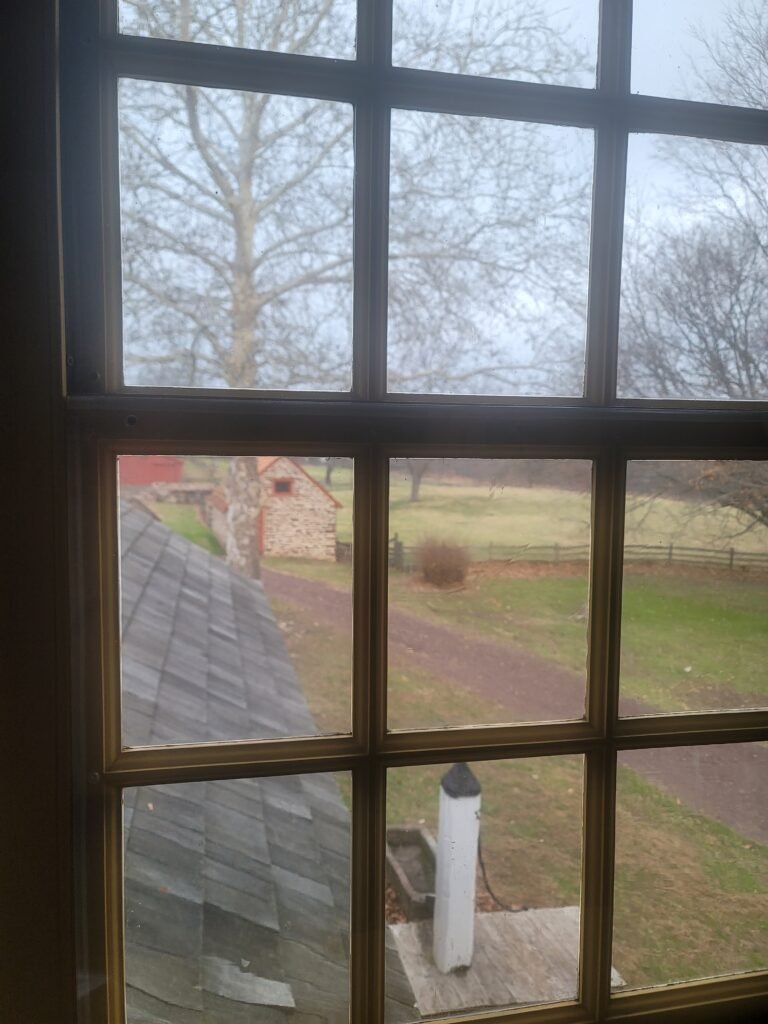
The first step to soul contentment isn’t doing anything at all. It’s just opening the door.
The Manifestation and Provision: “Show Yourself More and Come With Your Grace”
But the German farmers didn’t stop with just inviting Him in. The next part of their prayer says, “Show yourself ever more and more.” And honestly, this is where I get a little uncomfortable, because it’s asking for something that requires me to actually pay attention.
You see, it’s one thing to invite Jesus into your house. It’s another thing entirely to ask Him to make Himself known in every single room. We’re not talking about a polite visit where He sits quietly in the corner. We’re talking about wanting to see Him everywhere—in the kitchen when I’m stressed about dinner, in the bedroom when I can’t sleep, in the car when I’m stuck in traffic and feeling like a failure as a mom.
“Show yourself ever more and more.” The German phrase is “weich immer mehr aus,” and there’s this sense of hunger in it. Like we’re not satisfied with just a glimpse. We want the full experience.
I think about that waterfall adventure I had with my family in Canada. We hiked for hours to get to this massive waterfall, and at first, I was perfectly content to stand on the observation deck and take a selfie. You know, check it off the list. But my husband grabbed my hand and said, “Come on, let’s get closer.”
The closer we got, the more I could feel the power of that water. The mist on my face, the sound that seemed to come from the earth itself. And then she did something crazy—she stepped right through the waterfall. Just disappeared behind this wall of crashing water.
I stood there for the longest time, scared. What if I got swept away? What if I couldn’t find my way back? But finally, I took a deep breath and stepped through. And on the other side? It was like being in a cathedral made of water and light. I could see the whole thing from the inside—the power, the beauty, the way every drop was part of something magnificent.
That’s what this part of the prayer is asking for. We don’t want to just stand on the observation deck of faith, taking spiritual selfies and calling it good. We want to step through the waterfall. We want to see Jesus from the inside of our circumstances, not just from a safe distance.
Psalm 42 puts it this way: “As a deer pants for flowing streams, so pants my soul for you, O God. My soul thirsts for God, for the living God.” That’s not polite spiritual interest. That’s desperation. That’s knowing you’ll die of thirst if you don’t get closer to the source.
And then comes the part that absolutely undoes me every time: “Come with your grace and goodness.”
Not “Come because I finally got my act together.”
Not “Come because I’ve been reading my Bible every day and my prayer life is on point.” Come with YOUR grace and goodness.
I cannot tell you how many years I spent trying to bring my own goodness to the table. Trying to be the perfect Christian woman who never lost her temper, never doubted, never felt overwhelmed by life. I had this mental checklist of all the things I needed to fix about myself before I could really expect God to show up in power.
Here’s what that German prayer taught me: Jesus doesn’t come because we’re ready. He comes with His own readiness. He brings the grace. He brings the goodness. Our job isn’t to manufacture worthiness—our job is to open the door and let Him bring everything we need.
Second Corinthians 12:9 says, “My grace is sufficient for you, for my power is made perfect in weakness.” Perfect in weakness! Not in spite of our weakness, but because of it. When we stop trying to bring our own strength to the equation, there’s finally room for His.
The Peace: “Make My Soul Content”
And this is where the prayer gets to the heart of what we all desperately want. The final line of that German inscription says, “Stele mein nesel zu Fried”—make my soul content. The word “fried” here means peace, but it’s more than just the absence of conflict. It’s that deep, settled feeling that everything is exactly as it should be, even when everything around you is falling apart.
Those German farmers knew something about contentment that we’ve forgotten. They were living through the Revolutionary War, for crying out loud. Their crops could fail, their sons could be called to battle, their entire way of life could disappear overnight. And yet they carved into stone this prayer for soul contentment.
Not circumstantial contentment. Soul contentment.
I think about my son Michael when he was learning to walk. He’d take two wobbly steps, fall down, get back up, fall down again. But you know what? He was perfectly content in that process. He wasn’t anxious about whether he’d ever master walking. He wasn’t comparing himself to other toddlers who were already running around. He was just… present. Content to be exactly where he was in the journey.
That’s the “zu Fried” the German farmers were praying for. That settled soul that says, “I’m exactly where God wants me to be right now, even if I can’t see the whole picture.”
Philippians 4:7 calls it “the peace of God, which surpasses all understanding.” It doesn’t make sense from the outside. When people look at your circumstances, they should be scratching their heads, wondering how you’re not a complete mess. But your soul is quiet because it’s been set in a place of peace by the One who controls everything.
I learned this the hard way during Kevin’s health struggles. I kept trying to manufacture peace through control. If I could just manage all the details, research all the treatments, anticipate every possible outcome, then maybe I’d feel settled. But that’s not peace—that’s just exhaustion wearing a spiritual mask.
Real contentment came when I finally prayed that last line of the German inscription: “Make my soul content.” Not “Help me figure out how to be content.” Not “Give me circumstances that make contentment easy.” Just “You do it. You set my soul down in a place of peace.”
Psalm 23:1 says, “The Lord is my shepherd; I shall not want.” That’s the ultimate statement of contentment. Not because the shepherd promises perfect weather and green pastures every day, but because the sheep knows the shepherd can be trusted with whatever comes.
The beautiful thing about that old farmstead is that it’s still standing. All these years later, through wars and storms and seasons of plenty and seasons of want, those stones are still there. And that prayer is still carved into the wall, still asking for the same thing we’re asking for today: a soul that’s content because it knows who’s in charge.
Your Soul’s Headquarters Today
So here’s my challenge for you. Try this four-part prayer for one week and see what changes. Invite Jesus into your whole house, ask Him to show Himself more and more, let Him bring His grace instead of trying to bring your own, and ask Him to make your soul content. Those German farmers found something worth carving in stone. Maybe it’s time we found it too.